The Absence of Fear and the Zimmerman Verdict

Neighborhood Watch Reaction Los Angeles

When the “Not Guilty” verdict I half-expected was announced on Saturday, I thought back to June and a faculty meeting we had at my Catholic high school two days after underclassmen had cleared their lockers and been dismissed for the summer.  Teachers and administrators spent those days assessing the year and discussing new directions for the one to come.

The meeting began with a reading from the Bible, 1 John 4: 7-21.  Two lines resonated with me.  The first stated, “No one has ever seen God; but if we love one another, God lives in us and his love is made complete in us.”  The second simply said, “There is no fear in love.”  I liked the notion of a fearless love bounding through alleyways and trailer parks and gated communities and cul de sacs  in search of doubters to convert.

We broke into groups to discuss the difficulty teachers sometimes confront when transporting John’s lesson into an urban classroom.  A few of my colleagues, however well-meaning, acknowledged the intimidation they sometimes felt as they faced the black and brown faces gathered before them.  Thus far, as I prepare to enter my ninth year of teaching, I have never been afraid of any student, but I understood what they meant.

I bet the Zimmerman jurors understood it too.  On some level, as deep and primal as our need for food, we all have been taught that a young black male poses a threat to the order of things.  His dreams are bigger than his britches.  His grasp is shorter than his reach.  In his frustration, he pounds at the wall before him.  He paces the ground with an ominous energy, a predator in need of prey.  For him, love is either a capitulation or a conquest.  Within him, there is no poetry, no violins, no God.

Yesterday, in an interview I heard on NPR, Robert Zimmerman, brother of George, could not explain why, in March, he tweeted a picture of Martin with his middle fingers pointed upwards juxtaposed with a similar shot of De’Marquise Elkins, a seventeen-year-old black male accused of fatally shooting a thirteen-month-old baby in the face during a robbery attempt on the baby’s mother.  Besides their age, gender, race, and the middle finger salute, these two young men have nothing in common.  Or do they?  To Zimmerman, these two young black males are pieces of the same dirty puzzle.  They are angry, aimless demons whose sole purpose is to make life unbearable for the rest of us–unless we do as George did and arm ourselves, pursue, confront, and erase, even if it claims some mother’s defenseless child.

I considered Mr. Elkins, the young man from Georgia now branded with an unthinkable crime.  I wished he could find space in my classroom.  In his short, early life, what else did he learn besides this violent behavior of which he is accused?  I am not surprised that he, like too many others, would dabble in the emblems and lifestyles so many claim is the only legitimate birthright of young black life.   Much has been made of Martin’s “thug ambitions” displayed in social media photos:  the bling, marijuana plants, gold grill, naked teenage girls, and even a picture of a gun.  But I recognize these imposters for what they are–a young black male’s awkward attempt to simulate what so many claim he is.

There are too many rappers and lyricists  and marketers who willingly peddle their lucrative, hollow prescriptions of what young, susceptible blacks should think and say and worship, too many fathers afraid to become men and help uplift their children, too many mothers lost in their own versions of reality TV.  And, if you happen to be poor, it is debilitating to live in a bubble where currency is the only tangible evidence of God’s favor and love.

We all know about the oft-repeated problems, pitfalls, and pejoratives splattered across the comment section of any article or opinion piece remotely mentioning race.  What we too often forget is that the remedy is older than the symptoms they chronicle.  Knowledge is power, but, in too many quarters, power is the one thing young, black teenagers must never have.

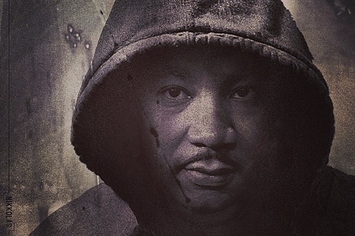
Throughout this horrible tragedy, I always saw Trayvon Martin as one of my students, at times serious, at times playful and mischievous.  I saw a beaming light of hope and possibility.  I saw humor, and zest, and days when sitting still might be a problem, and nights when homework was the last thing on his mind.  When I look into the photographs I have seen, I see the presence of God.

During the trial, when his friend Rachel Jeantel wilted under intense cross-examination, the teacher in me wanted to scoop her up, march her into my classroom, and fortify her insides.  I understood her defensiveness on so many levels, and I knew she was and is so much more than even she accepted.  All I kept wondering as she testified was where were her teachers all those years when she needed them?

When aggressive Juror B37, already on a pre-book tour she is now second-guessing, was asked to explain why she could not understand much of Ms. Jeantel’s testimony, she said she believed Martin’s friend felt “inadequate toward everyone because of her education and her communication skills.   I just felt sadness for her.”  When addressing the teens’ vernacular, she observed, “I think it’s just everyday life, the type of life they live, and how they’re living in the environment that they’re living in.”  She still claims this case was never about race, but, in my world, “they” will never be “us.”

It all comes back to teaching.  But how can our educational system ever prosper if we see too many of the children in it as defective, as menaces on the rise?  Trayvon Martin stood his ground and sought to protect his person from a stranger who wanted to define him as something he was not and had never been.  If teachers across this nation stand in front of their classrooms in the fall and see malice instead of miracles, no real learning can occur– no exchange is possible.  The educational growth we waste millions chasing will remain elusive as long as the bearers of knowledge, whatever their race, remain afraid.

Again, in the Bible, John tells us, “There is no fear in love.”  But it seems fanciful to be fearless in the world today.  There are too many bodies littering the road, too many Boston Marathon bombings, or Sandy Hook Elementary School shootings, or Aurora, Colorado theater massacres, or Trayvon Martin murders, not to be wary of something.

Perhaps it is better to reverse it.  There is no love in fear.  Fear extinguishes all compassion, all empathy, all light.  Fear feeds on darkness, walls, and easy subdivisions.  Fear turns a young black male with an Arizona iced tea, a bag of Skittles, and a hooded sweatshirt on a rainy night into an enemy whose eradication is commendable and justified.

Black parents all over America will redouble their efforts to teach their children not to bristle in the face of another man’s fear.  They will tell their progeny they must nod and explain and never fight back.  Sadly, it is part of a life they must learn to accept.

When their children return to school in the fall, too many will gather in buildings whose adult occupants are too fearful to teach, too eager to suspend or expel, too ready to corral into overcrowded rooms, too willing to discipline rather than instruct, too determined to poke and probe, test and retest in the name of learning and data, too unwilling to listen and enlighten, and too happy to blame their predictable failings on these unworthy children and their unworthy parents and lives.

For Trayvon Martin, fear led to his death.  But to hear the lead defense attorney tell and retell it, only George Zimmerman had a right to feel it that night.  Unarmed Trayvon Martin was the sociopathic hunter, and Zimmerman, with his concealed death machine and Superman illusions, was merely the watchman protecting his neighbors from yet another black plague waiting to explode.  The jurors believed him, as most of us knew they would.

Unless we attack that racial calculus and disprove it, until we turn our classrooms into beacons of love rather than citadels of fear, there will be no light shining in too many places where a child of God, albeit black and undervalued, squints his or her American eyes, peering  back.
artist-creates-photo-of-martin-luther-king-jr-in--1-4420-1373907534-23_big

–teachermandc

Tagged , , , , , , | 2 Comments

Their Eyes Keep Watching God

My tenth graders and I spent the last four weeks of the year reading Zora Neale Hurston’s masterpiece, Their Eyes Were Watching God.  Some got it, but some did not.  I understood.  It took me three or four turns before I surrendered to Hurston’s language and accepted her flow.

What a mighty river is she!  Yes, sometimes the dialect throws you and your ear rebels with judgmental vengeance.  At first glance, the story itself seems small.  So a black woman in some small town nobody knows finds love self-serving and elusive.   Where is the news?

So we tried, my students and I, to appreciate the broad challenges present–a woman reaching, and a man trying to step aside and let it happen.  It might seem like a common story to young ears; they still are defining love, so I can understand how tenth graders might wonder what all the fuss is about.

But then, in the final chapter of the protagonist Janie’s journey, she observes, “Love is lak de sea.  It’s uh movin’ thing, but still and all, it takes its shape from the de shore it meets, and it’s different with every shore.”  It was only after I read the lines aloud and watched my students nod in appreciation that I considered the weight of Hurston’s observation.

That’s what the real challenge of teaching is–especially in an urban world.  An effective teacher must remember to value all the many shores facing him or her, each holding its own promise and breathing its own air.  After all the “edumetrics” and statistics are put away–at least for a while–it becomes clear person-to-person instruction trumps all the theories and latest trends, standardized or otherwise.

Children are miracles, and we only fail them when we forget that.  When we treat them like demographic predictors waiting to plunder–and not children thirsty for the world–we do everyone a disservice.  Could it be the much ballyhooed “achievement gap” is primarily a reflection of the beholder’s truth?

Last week, the Census Bureau released its latest warning salvo about the browning of America.  The future welfare of our nation will increasingly depend upon the input of students like mine.  Soon, the very notion of the “All-American” child will be revised to include the African American, Latino, and Asian intonations in my classroom.

So my students and I read the book and made suppositions of our own.  Can false love ever be a necessary hurdle?  Is disappointment an ingrained part of life, or is it just an accidental stumble in the stretch to catch your self, reword your self, and outrun your distractions. It is hard to believe the path through the forest bends and weaves for a reason, that our obstacles have a reason.  It is hard to fathom that kind of love.

Like Janie, we roam with our eyes and minds, searching for a harbor beyond danger’s roar, above disaster’s tip.  Children understand they do not have all the answers yet.  No one does.  So they attempt what we adults request, but study what we do even more.  They wait for their break to taste for themselves life’s subtle splendor, while doing all they can to outmaneuver its easy mistakes.  In the process, they make their own.

The puzzle is wider than that:  how can we help build their inner climb for the looming horizons ahead?  Teachers have it easier than parents.  Ours is a temporary station at best.  Is it possible to make a difference in such little time?  How do we convince the children and ourselves that the only true barrier to enlightenment lies within?

We must find a way to keep them daring, reaching, climbing, and transcending.  We must feed their imagination and tease their wit.  But, more than that, we must let them know, as we who have struggled through it know, any talent is a blessing, and blessings must be celebrated and never ignored.

My career challenge over these next few weeks is to think more about my approach to my students.  I must continue to improve and make my inputs less intrusive, but not because the year was not productive.  It was.  But like any gardener worth his weight, I need to aerate the soil and then step back and let nature exhale.  I must work harder to temper direction with care.

It is a balancing act.  And where there have been rough patches, neglect, or misunderstandings, I must make my minutes before the plate do everything they can to restore faith in optimism. grace, and home runs.

Only then can the real learning start.

–teachermandc

Tagged , , , , , , , | 1 Comment

A Season for Every Time

Senior Graduation is a two-day affair at my school.  Both celebrations are held in the Basilica of the National Shrine of the Immaculate Conception on Michigan Avenue.  It is the largest Catholic church in the Americas, and, on Easter Sunday’s past, my family and I would lend our souls to the crowded gathering of the faithful and nearly faithful.  It is a beautiful structure with magnificent tile work, ornate glass, and rising arches that reek of majesty.

It’s one of those places where you can’t help but feel holy, or at least serene.  The bright quiet always reminds me of my days as an altar boy reciting a Latin mass whose words I did not really understand.  Still, I wore my mini-cassock with as much reverence as I could muster, and, when time came for me to ring the bell, I did so as though God Himself were listening.

Last week, I got to wear a different sort of uniform, one I pressed for the occasion.  At my old school, faculty only wore caps and gowns in the first few years after the school reopened.  For some reason, the practice stopped.  But, at the new school, this year’s graduation featured all the pomp and circumstance the occasion demanded.  I got to wear the colors of my graduate school and highest academic degree draped on the back of my robe.  My colleagues and I looked quite the intellectuals as we marched into the church.  I felt a sense of gravitas and purpose as we preceded the graduates to our seats near the altars at first the Baccalaureate Mass and then the graduation ceremony itself the following day.

But neither day belonged to us, and we knew it.  All the light and flutter fell on the young men and women occupying the front pews.  As they lined up before the procession, I shook hands and whispered greetings to as many as I could.  They all looked so much older in their caps and gowns, so much more rooted and sure of their steps and bearing.  It occurred to me that, while I will always miss them, they had outgrown the confines of my classroom–as it should be.  The ceremony is called “Commencement” for a reason, and every face had that glow you get on a family road trip when all the bags are finally loaded, and the seats are full, and the only thing left to do is pull away and go.

The school choir never sounded better, the principal never more eloquent.  When the Cardinal spoke during the Mass, I could envision him sitting with his colleagues in a conclave summoned to name a new pope.  At graduation itself, the Shrine filled with family and friends of the honorees.  I grabbed three programs for my scrapbook and studied the order listed on the program.

Everything seemed different.  Senior Class Officers, and not the administration, presided over the affair.  A “Call to Order” preceded the Invocation.  Then a “Welcome” led to a “Recognition of Platform Guests.”  After more greetings and a choir selection, I noticed a listing marked “Senior Class Presentation.”   I knew how hard the two faculty Class Sponsors had worked over four years, and I rightly guessed their efforts would again be acknowledged, as they should be.

But then something happened I didn’t expect.  I heard the names of three of my colleagues being summoned to the front of the altar.  I knew each to be a dedicated champion of students, particularly the Class of 2013, and I smiled at their special moment.  Then, the teacher sitting next to me nudged me with her elbow.  I turned to see what she wanted when I realized what I was hearing over the microphone was my name being called.  I rose from my seat and stood facing the graduates beside my other honored colleagues.

It was the first time I had seen all their faces seated in pews on both sides of the center aisle.  My altar perch had not provided the bird’s eye view I would have preferred.  But there I stood, and there they all were.  The look of utter surprise must have claimed my face.  I saw one student with whom I shared a particular bond laughing at what must have been a silly look.  But I couldn’t help  myself.  It was either stare straight ahead or cry.

When my turn came, a young lady whose voice I knew well read the words on a plague intended for me.  As she read, I lifted my left finger and wiped an itch from my eye.  I knew the graduates were watching, and I exaggerated the gesture.  A slight murmur in the crowd signaled laughter, and then the young lady finished reading.  I could only catch a few of the words as I surveyed the magnificent miracles facing me.

She said something about “success” and “understanding.”  I heard the line, “the teacher we could relate to the most,” and then the verb “inspired.”  I couldn’t believe they had done that–and no one told me.  For one of the few times in my recent life, I was actually surprised–and it showed.

“We love you,” one young lady who I taught all year yelled from her seat.  I think I heard applause.  I do know I said, “I love you too” in an audible voice, and I meant it.  As I touched my left fist to my heart and spread my right arm wide to embrace them all, I paused for one last look before returning to my seat.  I bowed my head in thanksgiving and didn’t come back down to the ground until it was time to present the diplomas.

Amidst family cheers as the principal read the names of the graduates (at least, I think it was the principal; I don’t really recall), I savored each one.  Later, as faculty led the procession out of the church, I heard more cheers, including some for me.  I had never seen anything like it, and I still marvel at the gift I received from such incredible young people.  The day was clearly their season, their time, and they had elected to include me.

I still have my two tenth grade classes to prepare for next week’s final exam.  I will use these last days to tell them how much our year together has meant to me.  I will remind them of how much we have learned together.  I will be sure to emphasize how much I appreciate their efforts.  And I will pretend I do not notice how empty the halls feel now that the seniors are gone.  After all, every student matters and probably does not hear it enough.

I was recently reminded in a life-affirming way that a dab of appreciation goes a long, long way.

–teachermandc

Tagged , , , | Leave a comment

Better Late Than Never: What to Do When the Scary Part Comes

Seniors at my school are done for the year.  I have never taught a seniors-only class before, and this year I had four.  Today, when I climbed the stairs to my classroom and passed the hallway where they usually gathered before the first bell, I found juniors already claiming the spot.  But they all still seemed a bit tentative as they appraised the new real estate.  I found myself missing my students.

Still, I like the traditions at my school.  Two weeks ago, there was a ring ceremony unlike any other I had witnessed.  After a series of songs by the choir, and a moving sermon by the school’s priest, each senior rose from their seat in the front center section of the auditorium and claimed a candle from a large table near the stage.  One by one, they rose, relinquished the space they had owned all year, climbed the stairs to the stage with a lit beacon, and then gingerly placed it in the hands of a waiting junior schoolmate.

The juniors then descended the opposite stair and claimed a seat in the now-empty senior section.  Seniors moved to the back of the auditorium.  I kept thinking about how so many of my seniors had circulated around that space during their four-year journey, moving from the far left freshman section, to the far right sophomore, to the rear center junior, to the front center spotlight–and then out.

“So, how did it feel to see the distance you have traveled?” I asked them later in class.  I expected effusive offerings, but the responses were decidedly muted.  I guess they know when reflection is justifiably private.  Still, I could tell they appreciated the meaning of the ceremony and their parting glance.  They must have noticed how the juniors, or rising seniors, beamed all day.

Next to college, high school is probably the last time four years carry such weight and meaning.  Maybe even more than college, the years between fourteen and eighteen carry such a wallop of emotion and growth.  As a teacher, it makes me want to accomplish a fraction of that movement in the same amount of time.  But such acceleration does not come without costs.

Unlike in years past, the seniors leaving are new to me.  I did not get to watch their progression up close, and all my attempts to shrink them down to freshman year and grow them up in my mind were futile, even after reviewing those awkward first year yearbook photos.  It just shows you have to take people where you find them and then relish the time you share.

Sadly, all the seniors will not be graduating on time.  Some faltered just as they rounded the final turn.  My colleagues and I never stopped yelling from the sideline, “Now is not the time to slow down.”  But no matter how much we waved and yelled and gesticulated, a few just could not rise to the tempo.  They are summer school-bound and will formally matriculate in August.  In years past, I had made it a point to always attend the public school summer ceremony.  This year, I will simply whisper a thanksgiving prayer.

I said that today to one young lady who stopped by to see me.  Problems at school and home derailed much of her senior year, and she will be repeating the year at a new school next year.  I never taught her directly, but I always enjoyed our conversations and kept looking for her face in the halls.  She left in February and never returned.  While we talked, I remembered how much I appreciated her generous smile and “old school” flavor.

“So what did you learn this year?” I asked her.

“A lot of things,” she said.  “I learned you can’t lose yourself just because the wind is blowing.”

I laughed, remembering how much I enjoyed the way she put things.  “I keep telling you you’re a writer.  Don’t forget that,” I said.  “What else?”

“I learned failure is a part of success.  I didn’t accomplish what I wanted to this year, but I’ll still get there,” she said.

“Don’t forget that,” I said.   “I have had some spectacular flair ups in my life.  Blow outs in front of a crowd.  Flat-on-my-face stumbles when I thought I was going to win.  I’m talking loud farts in a quiet church moments.”  We both laughed a good laugh.  “But I’m still here and I’m still reaching,” I said.  “And so will you.”

Later, on the drive home, I thought about the seemingly random moments in life that change things.  I have been fortunate to have witnessed so many, starting in my own life.  But, on the national stage, I have also seen my share.  I just happened to be watching live television when Lee Oswald was shot, and later Robert Kennedy.  I saw Neil Armstrong take those first steps on the moon, and I watched my grandmother dance as Dr. King delivered his “I Have a Dream” speech.  In 2008, I listened as President-elect Barack Obama thrilled a crowd in Chicago while embracing the history.

Two days ago, Kentucky Derby-winner Orb failed to win the Preakness Stakes and keep Triple Crown ambitions alive.  During my teen years, I watched as Secretariat, Seattle Slew, and Affirmed made that achievement seem routine.  Being young, I did not appreciate the wonder I witnessed.  I assumed the accomplishment would repeat itself for years to come.  Since 1919, only eleven horses have reached what has become an almost mystical distinction, and I got to cheer on three of them in the course of five short years. How foolish I was to assume moments like that would just continue naturally.

The wonder the young lady in my classroom–and all the eventual seniors I have taught and will teach–will discover in her life is the true relativity of time and the singular nature of the journey.  The ending is the last surprise in a long series of unexpected pitfalls and breathless attractions along the way.

I guess the trick is to take it all in, allow the upward gusts to carry you, and try hard not to look away when the scary part comes.

As far as we know, this is our one and only ride–and no one really wants to miss a thing.

–teachermandc

Tagged , , , , , | 2 Comments

The Bringing Up and the Letting Go

I am a fervent traditionalist in most matters excluding race, gender, and human potential; I think it’s the Capricorn in me.   I favor rooted things and try to anchor myself using nature’s rhythm as a guide.  I especially appreciate spring.   My azaleas are in bloom, and so are my seniors.  They feel the sun rising even as gravity summons.  No matter how much we honor the usual markers–award ceremonies, sports banquets, stellar yearbooks–and stop ever so briefly to lighten the weight of time, none of us is ever fully prepared to let go.

Friday was prom night.  I arrived early and gathered by the entrance with some of my colleagues.  As a teacher, I always feel privileged to attend an affair where parents are taboo.  Of course, with three daughters, I can easily imagine the scene at home, the young man’s knock on the door, the nervous talk, the young lady’s grand entrance, the endless photos, the fancy car, the soft hugs at the door, the gentle release.

Prom is a fascinating ritual.  I always picture a tribal past where the young adults flaunt their youth and announce their entry into the “big” world with all its privileges and glitz.  As a parent, I always worried about secret plans that inevitably accompany the night.  This weekend, as the couples arrived sparkling from head to toe, I almost saw myself–with a red, crushed velvet tux, ruffled shirt, and matching bow tie–stepping away from that limo years ago and strutting into the front atrium of my future life.

One of my buddies had smuggled champagne and two joints into the hotel room where we lounged afterwards.  While we sipped and puffed with our dates, we laughed at our audacity.  There would be time for college classes, awe-inspiring careers, a separate address, a lifetime love, and children of our own.  But for that night nothing mattered except that we looked good and felt even better–not for what little we ingested, but more for what we finally believed we were ready to leave behind.

High school graduation is still a very big deal.  Families become almost raucous as they cheer for their loved ones.  Back when I taught in public school, a few of my students were reaching a graduation threshold the parents never had.  So I understood the noise–even after the principal insisted all applause be held until the end, which never happened.  At least one teacher always complained, “Why are the loudest parents the ones I never saw?”

I knew.  In the years the child was growing, so were the adults.  Challenges and circumstances confront us all.  The unexpected must invariably be stirred into everyone’s stew.  No matter how complete we wish to appear when the children arrive, parents are never ready for the ultimate surprise:  children judge us most by what we do, not what we say.  But the hardest part comes with accepting that some of the parental sacrifices will go unrecorded by younger eyes, while most of the shortcomings will not.

When it comes to raising children, I now realize the playing field is not intended to be even or fair.  As a teacher, I try to remember I know nothing of dthe stories preceding my brief entry into a child’s life.  So I try hard to refrain from judgement and focus on the miracle in front of me who someone fed and clothed and taught and steered and maybe even  damaged long before opportunity knocked at my door.

Parents, grandparents, guardians and teachers are partners, even if we physically never meet.  They are expecting me to arm their not-so-little ones with what truths and facts I can provide to make the future wonders absorpable, and the future obstacles manageable, and the future miracles meaningful and worthy of embrace.  Meeting that expectation is the best part of my job.

One of my colleagues this year, a younger man from the Bahamas, has a three-year-old boy.  We share a prep period, and he speaks often of the time he shares with his son.  They read together and concoct a host of adventures to occupy their moments.  He is a devoted father, but I sometimes worry about his perspective on the years to come.  I am not sure he is prepared for the letting go.  Now, his son still reaches for his Daddy-hand when they cross the street together.  He listens to his father’s every word and obediently skips off to bed when asked.  Last week, I laughed at a tale he told me about a near mishap at Saturday soccer, and then I inadvertently added, “Enjoy it while it lasts.”

“Why do you say that?” he asked.

I paused, then answered, “No reason.  It’s just you teach.  You see how they change some as they grow.”

“Not mine,” he said.  “A lot of these kids don’t have a link with their parents, especially their Dad’s.  I want him to enjoy spending time with me.  I see us sitting down and talking when he’s in high school.”

“And I’m sure he will,” I said.  “Just not everything.”

“What do you mean?”

“I mean, do you really want him to tell you everything? ”

“Yes.  I want him to be comfortable sharing anything with me.”

“I know what you mean,” I said.  “But think about it.  Let’s say life is a poker game.  Sometimes you have a really great hand, you bet big, and win.  Sometimes, you bet big and lose.  And sometimes you have nothing and have to learn how to bluff and sell it.  How will your son learn how to bluff if he keeps showing you his hand?  Sooner or later, he’s gonna have to play for himself.

My colleague said nothing and went back to his work.  I sensed I needed to elaborate.

“Think of it this way,” I said.  “Teaching has shown me there are basically two kinds of people in the world; it all comes back to the way they were raised.  Parents can either teach their children to value things or people, but not both, at least not equally.  And I mean all people, not just the ones you know, or need, or resemble.  You are teaching your son to value people.  That will get him through whatever hand he’s dealt.”

“I never thought about it that way,” he said.  “Thanks.”

The bringing up and the letting go is not easy for parents.  It is not easy for children.  It is not easy for teachers either.  In eight years of classroom instruction, I have only missed one graduation, the Class of 2012, when wild horses kept me away.  It is an absence I will always regret.  And, while nothing matches witnessing my own children march those powerful steps, come this year’s graduation, I will get misty-eyed again as the principal reads the graduate roll.  A tear may fall.

I have already warned my students.

–teachermandc

Tagged , , , , , | 1 Comment

Fighting Words: Epilogue

Calmer heads prevailed, and the two warring girls were only suspended for a few days.  When they returned, each apologized to the class and retook their seats.  On the second day, during a prayer followed by petitions, one of the girls asked for good thoughts for an ailing relative.  The other one then quickly followed with a request for best wishes for her own upcoming exam, and then for her former antagonist’s family member.

“Here, here,” the top scholar in the class said, while everyone lightly applauded.

“Okay, enough of that,” I said in my teacher voice.  “Let’s talk about opposition paragraphs in persuasive essays.”

I figured it would be best to quickly move to another topic, but the glow in the eyes of both young ladies moved me.  The thing I love most about teenagers is their uncanny ability to read between the lines.  Sure, sometimes they charge without warning like attack dogs in an alley, but I know it’s just energy fueling their brigade, not malice.  Even the ill-tempered ones usually let the steam evaporate if I toss a peppermint candy his or her way.

I just get kids, especially teens.  I remember so vividly both the thrill and the terror my juvenile dreams evoked.  I remember the list of grown ups I vowed to never become, and the few I sought to emulate.  I remember trying on clothes that never seemed to fit.  I wanted so much, not just for me, but for my friends, and my family, and my nation, and the world.  Sometimes, when my creative writing seniors are not looking, they share poetry and literary portraits so poignant I have to stop what I am thinking and sit down.

Listening is what they crave, with as little judgement as possible.  Direction, maybe.  Judgement, never.  It is not always an easy order to fill.  Adult reflex suggests some form of lesson is in order.  A necessary lecture draped in precaution and once-upon-a-time is what they always do in the movies and those sitcoms where the children run the show.

Resisting the urge to instruct is never easy for a teacher, especially when some of the things students say and do make no apparent sense.  When the proportions appear mismatched, and little hurdles paralyze while big ones unduly shrink, you want to give a little shake to the shoulders and tell them what to do, or not do.

“All of that will pass,” you want to say.

And maybe it will.  But most of youth is the yearning to find out for yourself.  Why does that road hold a Caution sign?  Who put it there, and when?  I got burned more than twice before I really listened, and, even now, I sometimes wander where I probably should not.

Mistakes are such a part of learning.  In high school, I always redid the math problems I got wrong–on paper, or in my head. I want my students to understand that failure is the first sign of success.  The human spirit seems to crave some type of adventure.  It’s the way we define a well-lived life. My students want what everyone wants–someone who loves them, no matter what.

Until you feel that, you can’t feel safe enough to repair your damage and proceed.  I do not believe you can treasure something really worthwhile unless you’ve lost something valuable too.  When boys write about fathers who stayed away, or girls pout about a boy who lied, or a friend who betrayed, I always try to assure them that what they feel is real, but so is the sun shining outside, and the tomorrow waiting to rise.

“You can do it!” is one of my favorite chants.  I usually jump up and down when I say it.  Some students look at me and laugh.  They think I am too old to leap with enthusiasm.  “I told my mother about you,” one girl shared.  “I told her about this man older than dirt who just keeps coming.”

“Yea,” another boy said.  “I wanna be like you when I get old.  Where you get all that energy?”

I want to say, “From you, from all this life around me.  From the answers I still don’t have.”  But instead I turn to the boy or the girl and scowl, “Who you calling ‘old’?”

Then I break out in a Michael Jackson dance before returning to the board.

That move gets them every time.

–teachermandc

Tagged , , , | Leave a comment

Fighting Words: The Best Way to Avoid Being Stung

There was an altercation in my classroom today–a disagreement sailed beyond the boundaries of what I and the assailants expected.  Two girls allowed hurtful words to escalate beyond their “place of origin” in some meaningless aside, however deliberate.  Too often, passions unleashed without restraint exceed the grasp of their intent, and violence ensues.  Both young ladies possess fine minds and valuable insights; yet still I had to dismantle the vise grip they held on each other’s hair while the “b-word” floated all about.   Still, the biggest problem with teenagers is that no one really knows what exactly precipitates an angry exchange..

Sometimes, it can be an overheard fragment in the cafeteria, or a rumored romance that frayed someone else’s “turf”  two weeks before.  Maybe a not-so-bad paper (at least in the eyes of the author) garnered a lower-than-expected grade, and somebody has to pay.   Or maybe it is none of those things; maybe something or someone at home is simply not where it ought to be.

The trick in teaching is learning how to turn those tense moments into teachable ones.  This transformation is especially needed when each class is viewed as a preordained assemblage and not just some bureaucratic happenstance.   We all have something special to bring to this unique gathering space we share for almost a year.  I need to work harder to remind the students of that.

After I separated the two offenders, and both were removed from the room, I turned to my remaining students and asked, “Now who was the peacemaker here?  How might we have prevented the loss in our “family” here?  What opportunity did we miss?”

“We didn’t know,” those closest to the scene protested.  “They were just going back and forth when all of a sudden it got serious.”

His response reminded me that the world we inhabit, at times, seems overburdened by little things.  The “wrong” look or the loaded word can launch harsh misunderstandings, not just between individuals, but also between and among political parties, or competing branches, or warring celebrities on some silly reality show.  No matter where you stand, it seems, cooperation is a sissy word, and collaboration–without cheating–is a sin.

Little wonder that young people sometimes see arbitration and compromise as weakness.  Too many contests appear to be “winner-take-all,” as if there were such a thing.  Victories are always relative, and conflict changes every party involved.  Each girl today saw themselves as victims, as mere defenders responding to slight.  It matters little who threw the first word.  They volleyed it back and forth until momentum took over and the only resolution became physical.  Neither wanted to end up with her hair caught in the vise grip of the other, but it happened anyway.

It was over almost as soon as it started, but the tension lingered.  We had all been laughing together only minutes before.  The students had begun completing their annotations for the segment we devoted to the 1966 bombing of the 16th Street Baptist Church in Birmingham, Alabama where four little girls died.  The day before, the students lent their voices and enthusiasm to a rounding reading of Dr. King’s eulogy for the real victims delivered on September 18th of that same year.  We analyzed the rhetorical challenges confronting Dr. King that day, identified the many different audiences listening, dissected the multiple purposes he needed to serve, and uncovered the subtle blends of ethos, pathos, and logos lending his words their impact.

We talked about peace and nonviolence, words two of my students forgot only one day later.  What can we learn for this?  “When you first hear anger or hurt enter an exchange, come and alert me if I am not aware,” I instructed.    “Just whisper and I will hear you. Don’t wait until it is too late to act.”

“What other changes can we make?”

“We can learn to care about each other,” my philosopher student volunteered.  “We need to be in this together.  Everybody just goes for themselves.”

“What we need to remember,” I added, “is that words affect people.  That’s the source of your power.  Don’t just give it away, or toss it lightly.  Respect your words.  Right now, your story has already begun.  This chapter is being written whether you like it or not.  Might as well seize the pen and compose something worth reading.  Remember, anyone can fight.  Sometimes, it takes a special soul not to.”

We discussed so many other things until the bell rang.  On the way home, I thought of one more tenet I meant to share but forgot.  I should have taught them one of those hard things I learned along the way:  the best way to avoid being stung–is not to sting.

I will write that on the board come Thursday.

–teachermandc

Tagged , , , , , | Leave a comment

A Cage in Search of a Bird

birds-cage-01-c-01

“A cage went in search of a bird.”
– Franz Kafka, The Third Notebook, November 6, 1917

In my Senior English World Literature classes, we tackled Kafka’s “The Metamorphosis” in the last part of the first semester.  While the notion of a man waking up as “vermin” did not exactly startle these children of the X-men generation, they were intrigued by the concept of existentialism and all the associated -ism’s (surrealism, expressionism, Freudianism, nihilism, modernism) of the late nineteenth and early twentieth centuries.  The world was changing and uncertain, and the reach by Kafka and others to claim some piece of life as an intrinsically human adventure–private and immutable–resonated with my seniors on the doorstep of their own beginnings.

Mine is a private, Catholic school, and religion is a core subject.  Group prayer is as central to the day as the uniform the students wear.  Students regularly tackle the mysteries of faith, the Bible as creed, and the challenges confronting a God-centered life.  Still, their backgrounds, while diverse, are decidedly urban.  They sense or have witnessed the dangerous excesses of human existence, even as they covet the riches and spectacle cajoling from their iPads, iPods, iPhones, and such.  Like every generation in the modern era, they want it all–but carefully.

As a young man, I flocked in my college years to courses in sociological theory.  I especially enjoyed the notion of life as social theater in which my role was a central part.  And it was more than ego.  I needed to believe that the injustices I found in the world were man-made and therefore surmountable.  As a black man born in the Civil Rights era, I understood the existentialists’ warnings about modern alienation and angst.  But I needed to believe that one life could make a difference, even if no other human being knew or recognized the change.  If life was a script the young inherited, I needed to believe the terms and plot lines could be shaped anew with courage fueled by prayer.  So I understood immediately while my seniors wanted to hear more about the history of knowledge.

A cage in search of a bird.  On the surface, the image is dire and foreboding.  What good could come from such a predicament?  How could this man-made artifact synonymous with capture ever escape its axis and find a canary to claim?  And why would a free-flying spirit every acquiesce to such an arrangement?  I mean, what’s in it for the bird?

Gregor Samsa, the sad protagonist in “The Metamorphosis,” lived a surface life.  He did what he was told he should in order to feed his obligations, but he discovered no real joy in the unfolding.  He buried beneath the cloak of his adult responsibilities the beating of his youthful heart.  He compromised his yearnings in the name not of art, but of sustenance.  He did what he must, but no more.

Somewhere in the realm between God’s will and human toil, I believe there is room for inspiration, ignition, and inscription.  Of course, personal flight will always be a challenge, and who’s to say cages were meant to fly?  I told my students that Kafka’s warning–his fear–embodies the struggle we all face in a time when technology both rivals and augments imagination.  How do we take our cages with us as we tackle the sky?

How do we make our whole lives matter without making matter our whole lives?

‘Oh, that’s deep,” one young lady observed.

“Tell me about it,” I replied.

–teachermandc

Tagged , , , , , | 1 Comment

Christmas Memories

When I was a little boy, I could never sleep through Christmas Eve.  I always awoke from fiery dreams at about two or three in the morning.  Once, I thought I heard hoofs on our roof and forced myself back to sleep lest I broke the promise all little kids make to never jeopardize magic.  So strong was my belief that when I was seven and discovered a cache of goodies in my mother’s bedroom closet three days before Christmas, I convinced myself even after those same toys landed under our tree with a note from Santa that it really was his doing–just in a really odd way.

I brought that same conviction into our Catholic church on Sundays.  I was an altar boy who knew the Latin Mass by heart and shook the bells on cue–never late–as though the future of heaven depended on it.  I think the amazing thing about children, even the big ones, is their willingness to believe in the unseen and challenge the unspoken.  They are born somehow with antennas rising not so much from their heads as their hearts.  They want to hold and be held, love and be loved, miss and be missed.  The more I teach, the more I understand it really is that simple and that hard.

Our children, now grown, are home for Christmas.  Somehow, no matter where they all are in their lives, they always make room for that.  The house, as usual, is ablaze with creches and elves and wreathes and a real live tree–the biggest I could find.  My mother bought most of the ornaments years ago, and they shimmer in a corner of the house my in-laws purchased with their lives.

I find myself missing so many things this time of year, even as I rejoice in all I have.  My eldest daughter’s train arrived at 9:35 PM on Sunday.  I swooped her up and convinced her to come with me to this karaoke place I love.  I have taken here there a few times in the past few years, and I always enjoy showing her off.  She is a wonderful singer and a natural performer.  More than a few faces in that familiar crowd said she gets it from me.  They watched my luminous face as she sang; they silently clapped when we danced.  “Man,” one buddy said, “you’re the O.G.  You and your daughter got it like that?”

My middle daughter and her dog Mia arrived from California on Monday afternoon.  She is a consummate bargain hunter and found a cheaper flight, but we will have to forgo our ritual of buying the tree together.  On Saturday, I drove to our usual tree buying spot, but the lot was empty.  A man in the neighborhood told me new owners had decided to do something else with the land.  I frantically hunted on line for a new space, all the while hearing my daughter’s voice reminding me to find a full, happy tree that would do our memories justice.

Her mom picked her up while I completed my customary last-minute grocery shopping for Tuesday’s dinner.  I decided to go traditional:  mac-n-cheese, collards, butterflied turkey, pot roast, scalloped potatoes, corn bread pudding, sweet potato souffle, apple/cranberry stuffing, and homemade gravy.  It is a menu my mother and mother-in-law would love.

Our youngest left her nearby apartment yesterday to spend a few days with all of us.  She is a teacher like me.  Her students are just beginning their academic life while mine are nearing the end of their high school goal post.  I enjoy listening to her ideas, and the way she shares herself.  But, try as I might, I cannot fully remember being that young, though I do recall the optimism and the doubts.

No matter the age, we all have them both–optimism and doubts.  Some of my students shushed me last Thursday when I dared to make a weak allusion to the misinterpreted Mayan doomsday prediction, as though merely mentioning it might make it so.  In the exams for both my sophomores and seniors, I asked them to annotate and dissect an excerpt from President Obama’s address at the memorial for the Sandy Hook Elementary School victims.  I wanted them not only to display their close reading talents, but also to consider the impact of the President’s words.  Young people today–and maybe always–are not blind to the darker sides of life.  I suppose the job of adults, especially teachers, is always remind them of the light.

If Christmas day runs true to form, I will oversleep and start dinner a little later than I should.  Then, while I did get a head start and reviewed my shopping list twice, invariably I will discover some key ingredient I forgot to buy.  I will scramble and focus and improvise, and sometime around 6 PM, dinner will be served.

I will say a prayer before we eat, as I always do.  Usually, it is short because everyone is hungry, and we all got up early to open presents together.  But I want to say something more this year.  I want to tell them how lucky I am to be doing what I love–and I want to remind them to seek the same.  I want to show them somehow what a blessing they have been to me and their mother.  I did not have a father to watch as I grew into manhood, and there have been many times when I have fallen short.  But I want them to understand how warm I am to have them all here and home again.

We are the fortunate–and that is something we must ever forget, especially on nights like this.

–teachermandc

Tagged , , , | Leave a comment

On Your Mark

I’m not going to pretend.  I’ve been away from this blog too long. But I needed time to adjust my wings.  Flight is often tenuous, especially when it comes to a new school, a new system, and a new beginning.  Face it, we sometimes take to the air and flap and flap and still wonder– has my landing really arrived?

Truth be told, I love my new setting, even as I mourn the old.  Private school is really no different.  The students want the usual things, but the declaration is not phrased the same.  Too many have been coddled into believing that material things really do trump reading and ideas.  The challenge for me remains constant.  I need to find the place which conveys my love and good intentions without obscuring the arduous climb they face.  Excellence is never a given, and too many words come free.

I had five classes today, as usual.  Yesterday was a sick day, and I was up very late last night, watching Monday Night Football and revamping my energy.  My first, my smallest class, overflowed, it seemed, with fourteen students who wanted learning, but just not quite enough.  Boys overwhelm the room.  I understand their rush to be men, but when I tell them it takes work and patience, they immediately seek some release.  They have heard it all their lives.  At times, I am guilty of trying too much to show my understanding and working too little to reveal life’s darkest truth–when it comes to your burdens, the ultimate earthly weight is often yours alone to bear.

The young ladies are more knowing.  They already understand the road they face will be harder to navigate.  They see in their mother’s faces the places they both yearn to visit and avoid. They have heard all the stories about what was and might have been.  “There are no guarantees,” one brave soul volunteers.  “Yes,” I answer.  “But how can we still make it work?”

I turned four boys in my senior writing class in today for rude and disruptive behavior.  One was temporarily suspended.  I know it was partly my fault.  I should have tightened the boundaries earlier.  But I believed in time they would figure out my one primal peeve:  do not interfere with the learning, even as we laugh along the way.

A few of their classmates now call me a “snitch.”  And when I tried to explain to one after school that, after all, it was a blind test starring the 2012 AP English Language argument question, and how all the students deserved quiet and time to write, he dismissed my concerns as an old man’s rumble.  It is a fight I cannot win.

Teaching isn’t easy–nor should it be.  But sometimes you stumble upon a moment you didn’t expect when everyone is silent and instruction controls the room. I know current dogma argues otherwise.  The reformers still believe teachers are nothing more than spools in a wheel, even when troublesome data suggests otherwise.  “No more than ten minutes of talking,” a supervisor once warned.  “Let them figure it out for themselves.”

But I know of no such village.  Take today.  In both my tenth grade classes, advanced and “average.” I unveiled an assignment I had hinted at for weeks.  After researching the importance of names, ethnic and otherwise, I instructed them to craft a story about their own.  I assigned senses charts and generic questions about the impact of history, mythology, and culture on the process of picking names.

“Tell me about your sound,” I urged.  “How does your music resonate within?  How does it feel to you?” I asked. Earlier, I plowed them with information  about the most popular names from most every  significant American ethnic group.  “Circle the rhythm of those whose faces you recognize,” I asked.

We talked about legacies and obstacles.  We read about a boy named “Osama” and a girl with a “Cisneros” last name.  We debated the merits of surface judgement and reflexive assignments like “ghetto” and “pretty” to the hats we wear.

That set up today, when I took it further.  “Write a story about who you are using only your name,” I said.  “Last month, we did exercises about imagery and figurative language.  We talked about how some words function like spices and herbs in writing.  Sprinkle just enough and no more.”

Today, just as I finally unveiled the name writing assignment, I decided to give them a piece of me.  It is not fair of teachers to demand more than they seek.  I handed out my take on the challenge, but not before assuring them it took me many years and countless revisions to “work it all out.”  I read:

On Your Mark

 For the longest, I assumed my father had named me as his one bold gesture of paternal outreach. He named me, but did not linger long enough to see how it would fit. No, he left the alterations for me to handle, the letting out and the tucking in. It was mine alone to maneuver through archways and tunnels, through honor rolls and disappointments, through first kisses and thirsty good-byes. But then I discovered, shorty after turning fifteen, that my name was actually my older brother’s idea. He had been inspired by his own deep affection for Mark, the Gospel writer who spun biblical tales of heroic tragedy and true belief.

 My name, I suppose, does elicit a certain expectation of honor from those who hear it. The banner rings crisp and clear. There is no confusion, no ostentatious display. Mark is the sound of honest labor and stubborn hope. It is the gun’s burst at the start of a race, the musky smell of strain and sweat as the spirit wills the body into action. Watch the yearning ripple forward, and upward, and on. Feel the slow-burning heat of a mind at work hungry for something more.

 Mark is too simple and plain a name for shiny medals or showy parades waiting at the finish line. My name moves not for victory so much as for movement’s sake. My history is healed by the attempt, by the struggle to be more than the echo of my father’s parting steps.

 For me, my sound, my symbol, is not the flashy gait of the sprinter chasing records, but rather the steady pull of the long distance runner, counting his paces, eyes locked on the horizon–keeping time.

The tenth graders applauded when I finished, and I turned to face the board so they would not see me smile.  Now if I could just find a way to lure my seniors on board.

-teachermandc.

Tagged , | Leave a comment